Danger Manelis: One BMX Rider, Two Shoots, One Story
A garage portrait and a first try at lighting BMX tricks in the bowl, and why I lit them as one shoot instead of two.
I recently had the opportunity to work with a local BMX rider, Andrew "Danger" Manelis, on two portrait shoots built around his move toward riding professionally. One would be a portrait of him with his weapon of choice, the Danger line by Machine. The other would be him in action on some local ramps.
My first thought was that these were two completely different shoots and should be treated that way, each with its own lighting, mood, color and design. But after watching a few movies and looking through portfolios of photographers I respect, I realized that wasn't the case at all. These were two portraits of the same thing. Not just Andrew himself, but the concentration and determination it takes to roll into the bowl with a specific trick or run in mind. To know exactly how much speed, pump and pop you need to pull off one trick and flow into the next, in something that's not only an athletic pursuit but an art form. That's what we were capturing, and that's how I approached both shoots.
The garage portrait
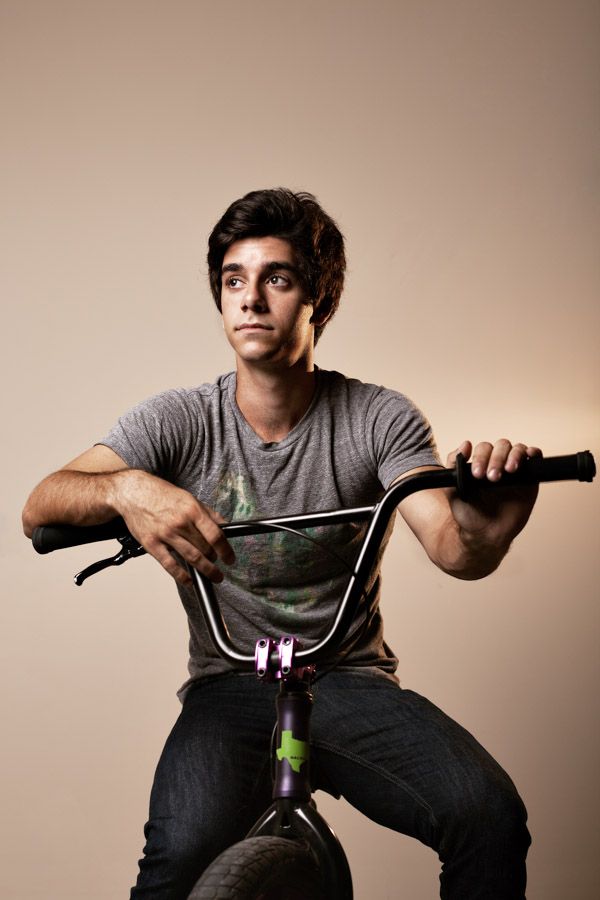
We started with the portraits. After fighting to find a backdrop and a place that was easy for both of us to get to but still had a BMX feel, we ended up in my cramped garage and made it work.
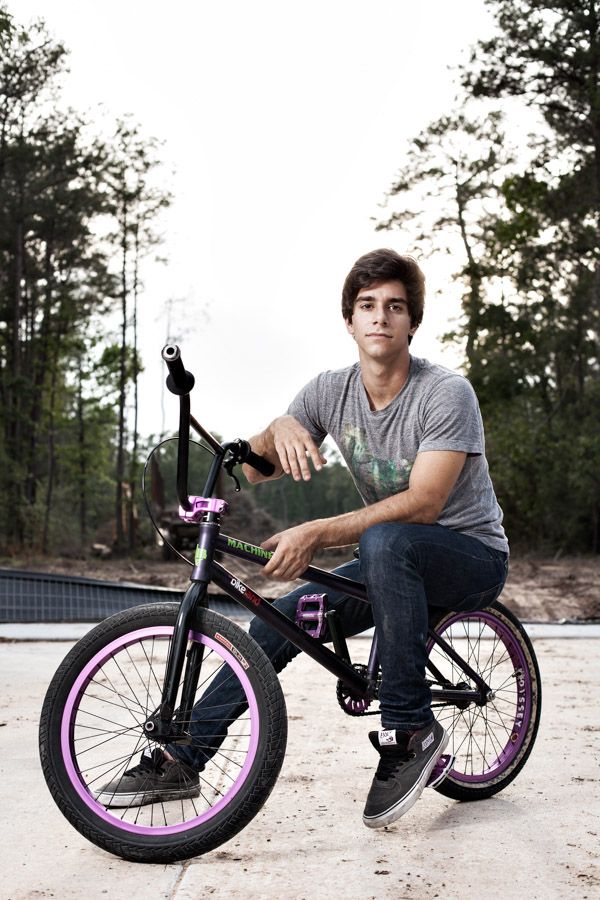
I wanted to keep Danger serious throughout, as if he were thinking through his next trick (and looking intense, come on). To make it believable, I wanted him to look the way he would at the ramps: not standing off to one side or away from his bike, but sitting on it the way he would while watching someone else's run or just before dropping in himself. It was a blast to create.
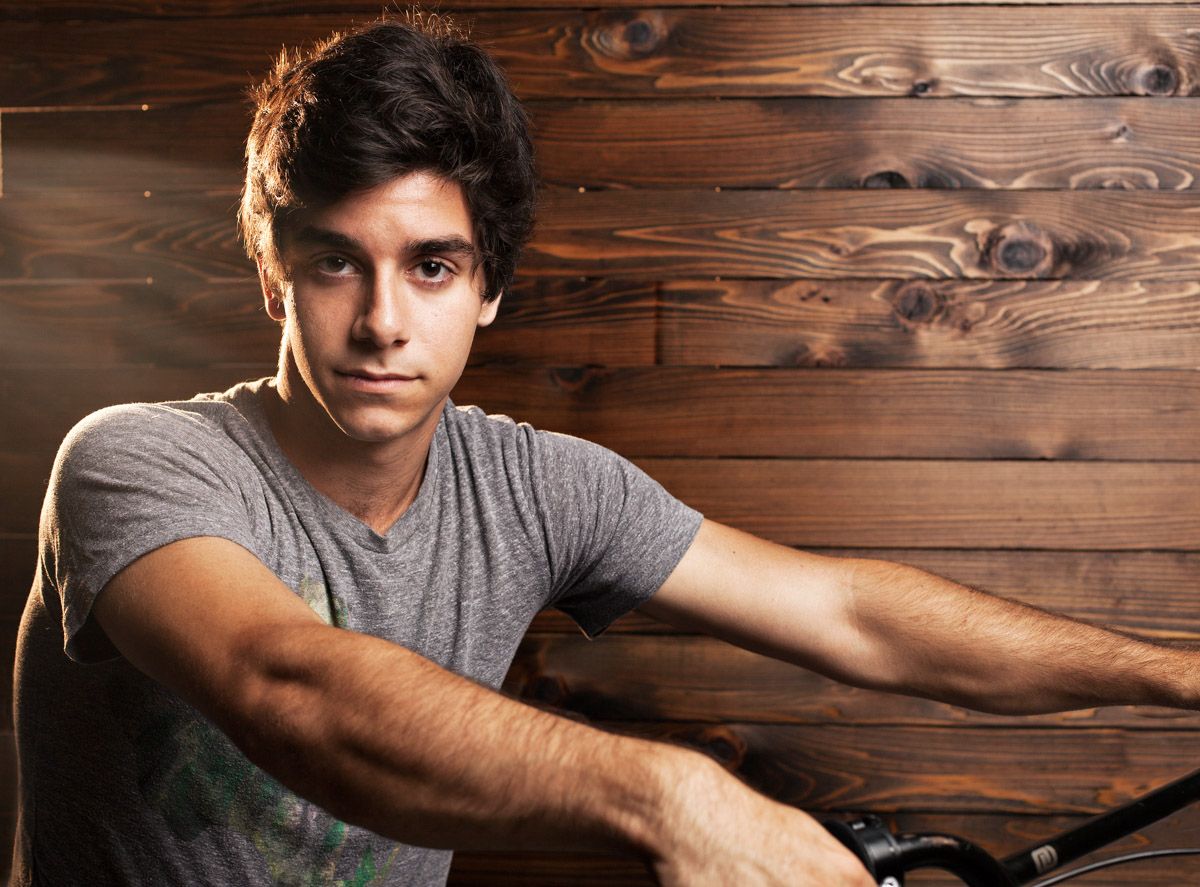
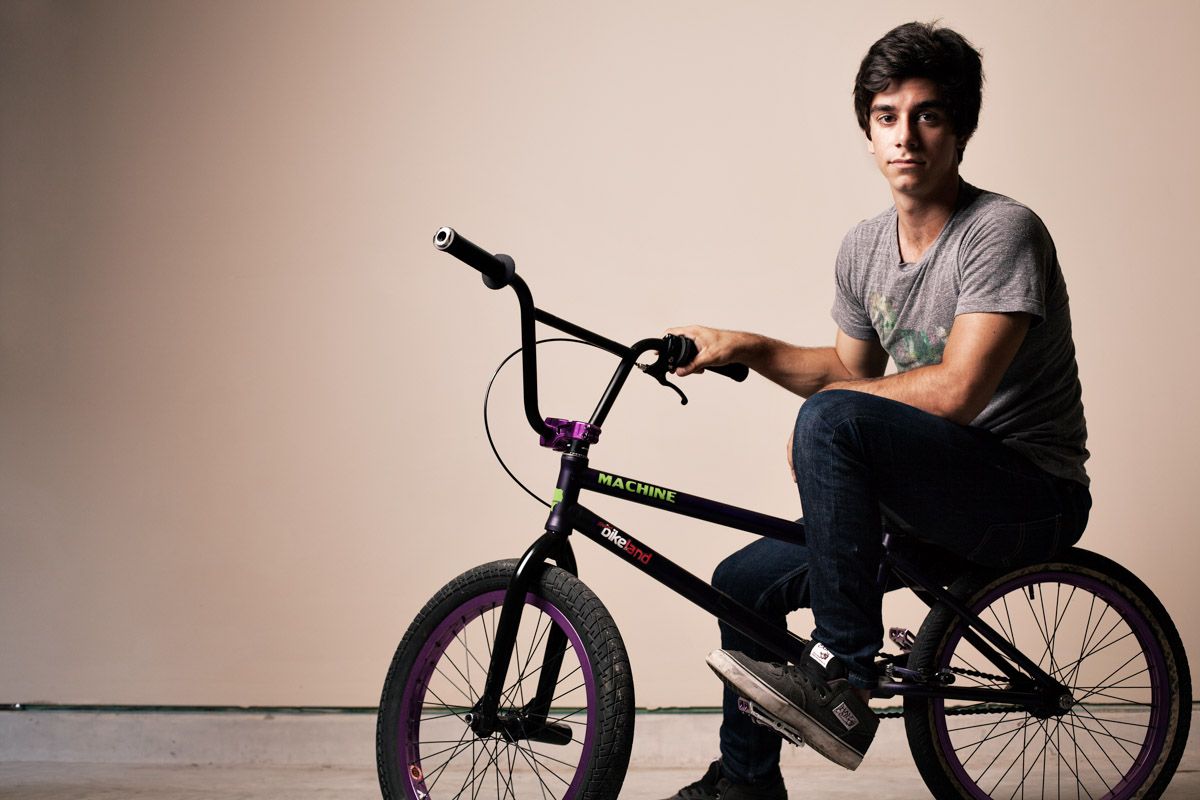
For the lighting, I wanted to soften the look a bit, so I started with a large softbox as close to him as possible, coming down at a 45-degree angle from a fairly high vantage point. Then I added a kicker light (a simple strobe head on a Cybersync trigger) with a CTO gel to bring in some color and separate him from the background. I shot from a low perspective to give him a commanding presence in the frame, and used a 50mm f/1.4 at a fairly shallow depth of field for that painterly background while keeping his whole face in focus.
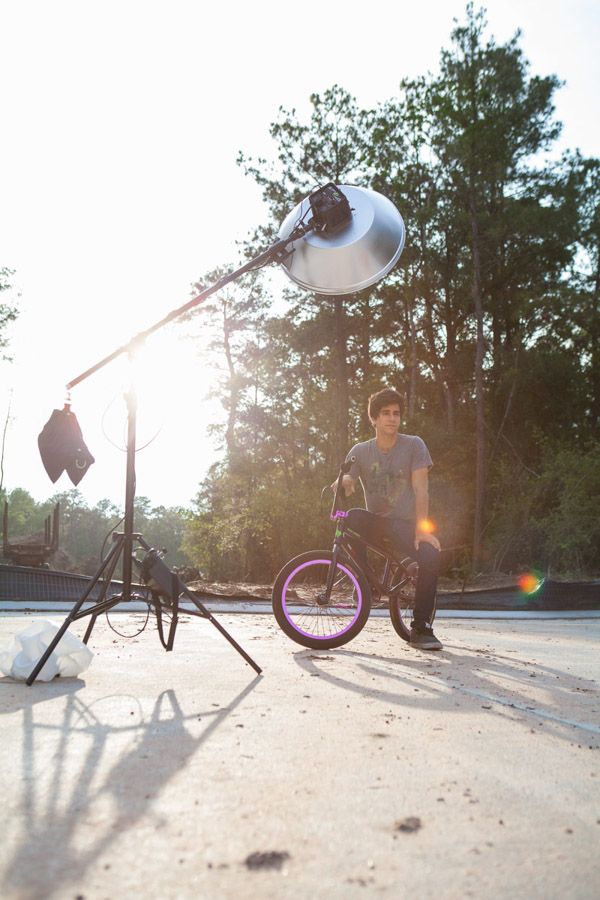
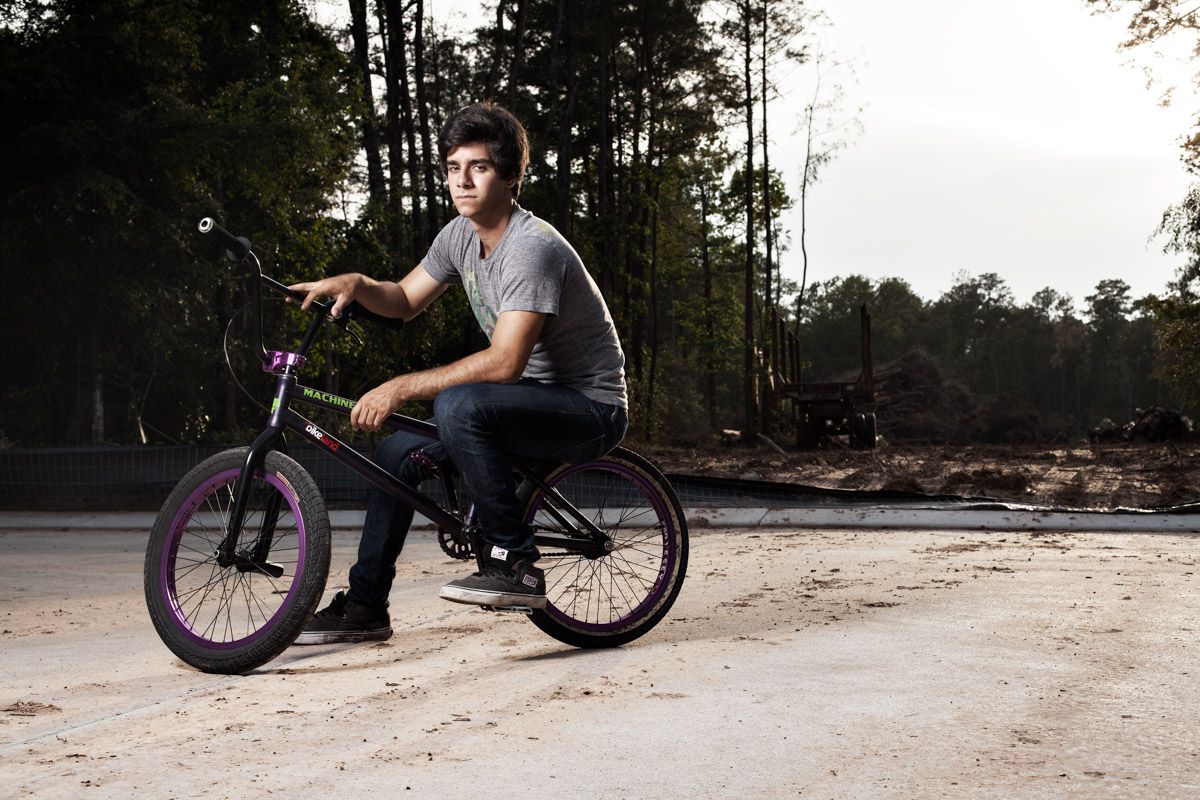
For the outdoor portraits, I used a harsher light source, a silver beauty dish, to overpower the sun as much as possible and let the sun itself act as the background light. Again I shot the 50mm, on my Canon 5D Mark II. To keep the background darker than the foreground, I raised my shutter speed to the camera's max sync speed (1/200s) and used the in-camera meter to read one to two stops underexposed. Then, with that background reading in mind, I used a light meter and turned up my light until the meter showed the same reading I'd been seeing on the camera.
In the bowl
The second part of the shoot was at the ramps, and it was a new experience for me entirely. Growing up in Iowa, I'd photographed friends snowboarding with Mom's point-and-shoot, but this was more complicated and a lot more equipment-heavy.
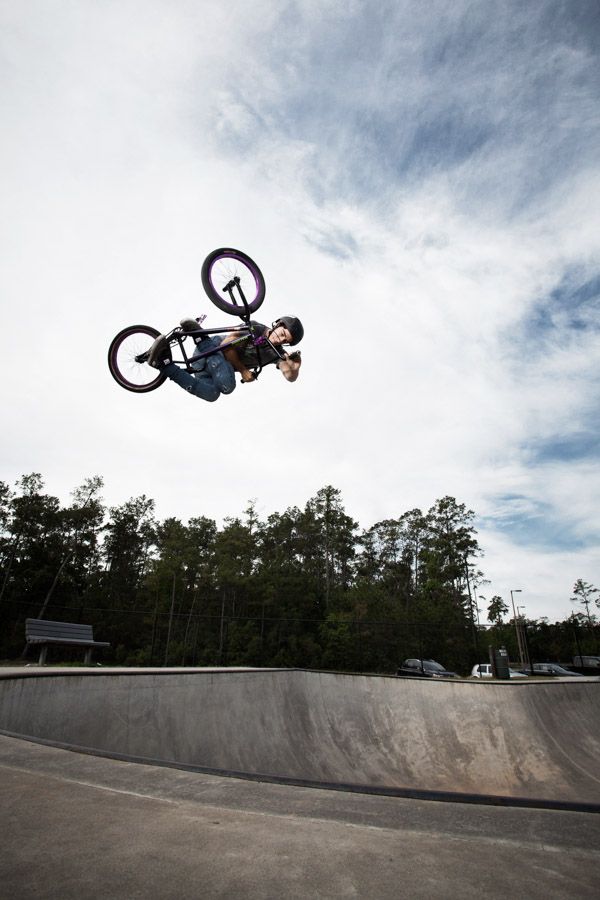
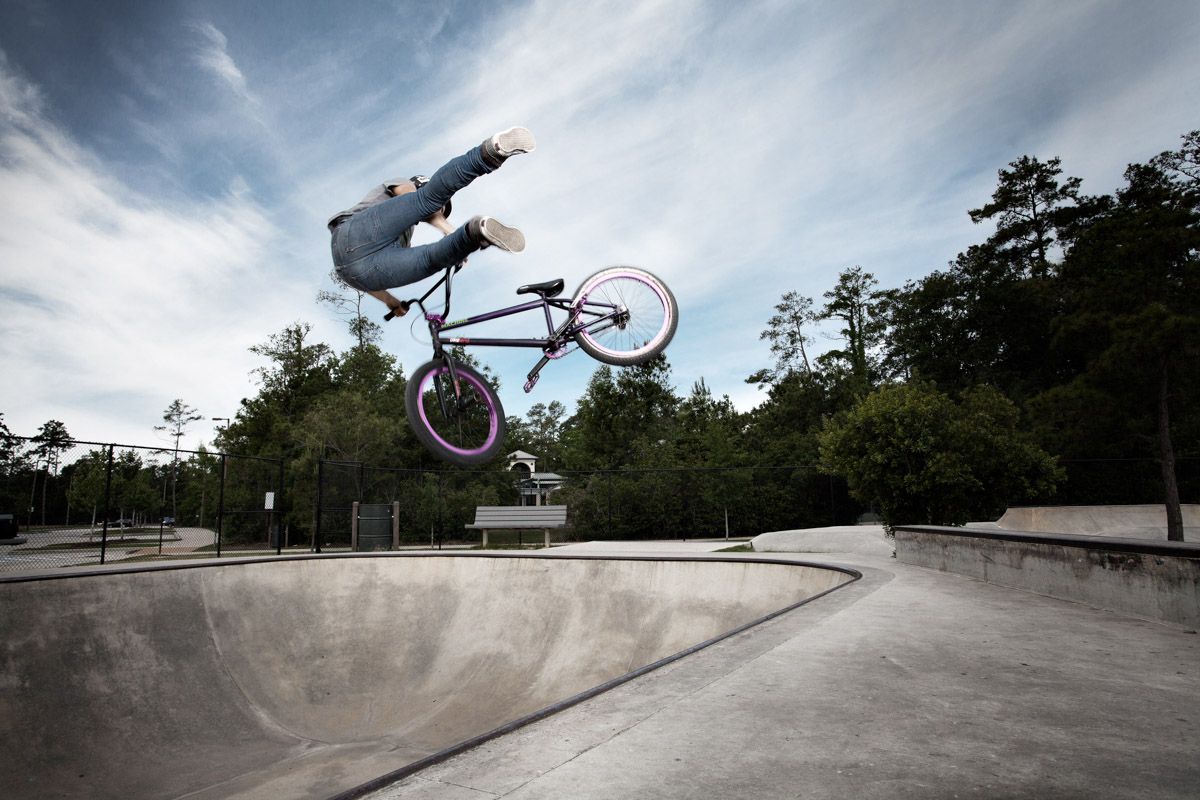
The goal was to:
- watch where Danger would hit the ramp and judge how high he'd go;
- figure out where his face, body and bike would be;
- frame the shot accordingly;
- set a light (the silver beauty dish again, which we used all day to overpower the sun) in roughly the spot where he'd be;
- estimate the exposure from a best guess at the distance;
- and catch the trick at the peak of his flight.
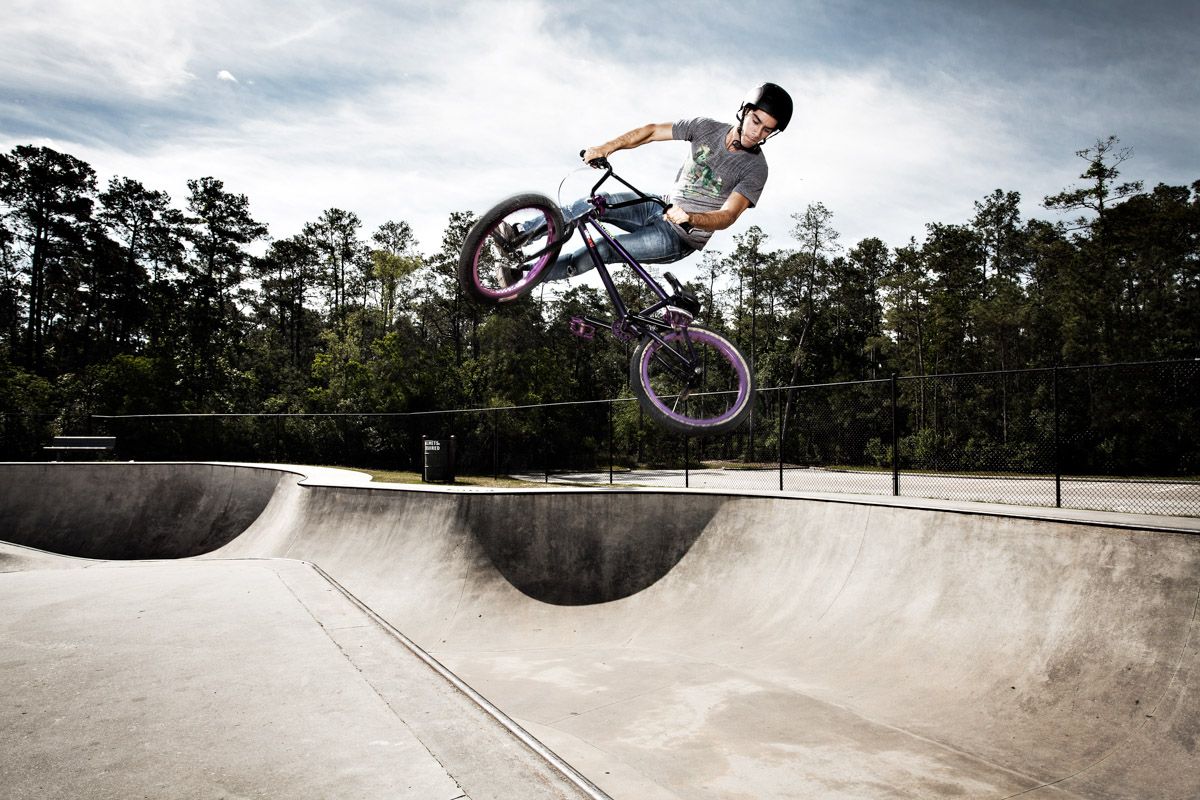

Simple, right? Believe it or not, we nailed the first trick, a turn-down at the far end of the big bowl, on the first try. Other tricks took more attempts, but I was thrilled with our first outing into the bowl, and my head was spinning with possibilities for extreme sports photography.
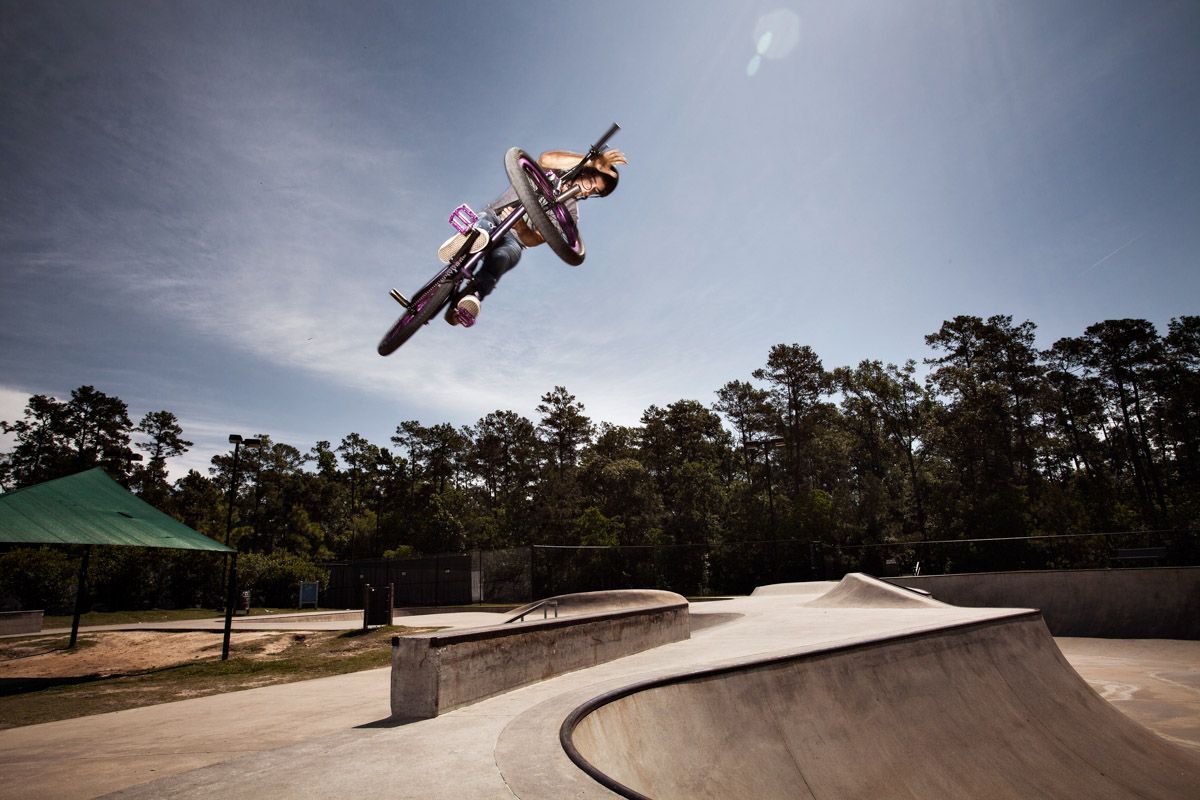

We were amazed by Danger's abilities. He had Sam squirming a bit the first time he pumped into the ramp and whipped a backflip out of the transition like it was nothing. It was awesome, and we'd only scratched the surface of what he can do.
Originally published on the Ruddock Visuals blog, May 2013. Lightly edited in 2026.